A DIY multi zone mini split installation lets you heat and cool several rooms from one outdoor condenser, and each indoor air handler can control its own zone on its own. If you want to skip the ductwork and the contractor markup, a DIY installation can be a practical way to get whole-home comfort. This guide walks you through every stage, from deciding how many rooms to include and picking the right system, to mounting equipment, connecting line sets and running final safety checks, so you can install your system with confidence or know exactly when to call in a pro.
Start Here
Is DIY Multi-Zone Right for Your Home?
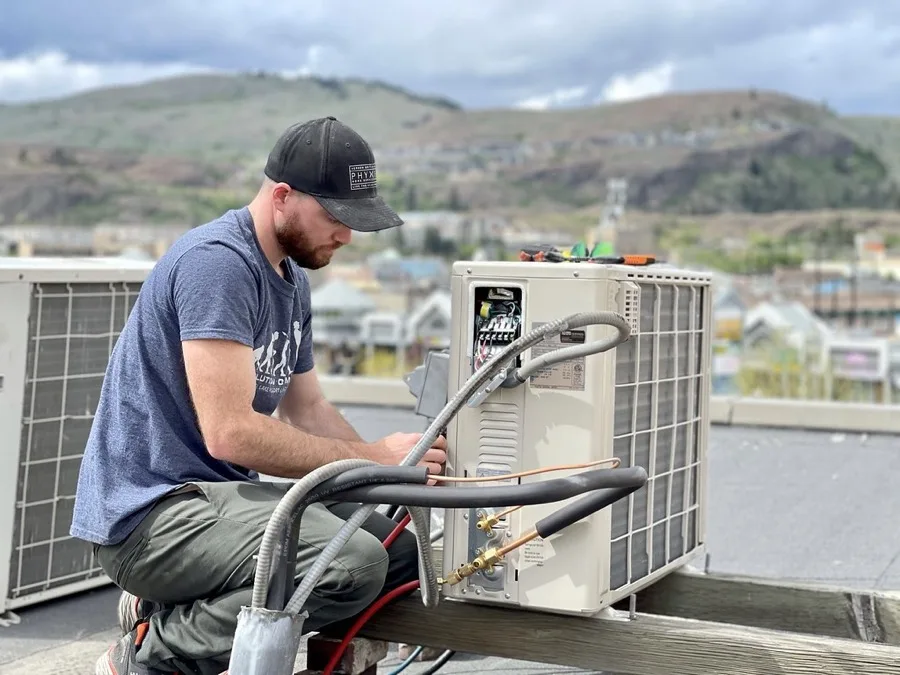
Traditional ducted HVAC systems can lose a lot of their energy because of ductwork leaks and because heat can get lost in walls, attics and crawl spaces. A multi-zone mini split can get rid of that waste completely. Instead of forcing conditioned air through a network of ducts, each indoor unit controls a separate room or zone, delivering heating and cooling exactly where you need it.
Modern DIY multi-zone systems connect several indoor air handlers to a single outdoor unit through individual refrigerant line sets. Zone Air builds 2 and 3 zone systems that run on one outdoor unit. The outdoor condenser has inverter-driven compressor technology that changes its output based on real-time demand across all connected zones. The result is quieter operation (Zone Air's wall-mount heads run as low as 30 dB on their quiet setting), precise temperature control room by room, and efficiency ratings reaching 24 SEER2 on Zone Air's 230V wall-mount and ceiling cassette multi-zone systems.
Where multi-zone systems shine
Multi-zone setups aren't limited to one type of home. Here are common scenarios where they can make the most sense:
- 3-bedroom ranch houses (1,500–1,700 sq. ft.): A 3-zone system handles the living room and the two bedrooms you use most, with individual control in each space, or a 4-zone system covers every bedroom too.
- 2-story homes (~2,000 sq. ft.): Upstairs bedrooms get hot in summer and a lower level living area stays cold in winter, so each level gets its own climate zone.
- Finished basements and in-law suites: A compact 2-zone system covers a main room and a secondary bedroom or office.
- Room additions, garages and bonus rooms: One or two extra zones extend comfort without opening up existing ductwork.
What makes it "DIY-friendly"?
Zone Air systems are specifically designed for homeowner installation. They use pre-charged line sets with quick-connect fittings, so you don't need a vacuum pump, refrigerant charging or specialized training, and you don't need EPA 608 certification as long as the factory-sealed refrigerant circuit stays closed. Zone Air's warranty is written for self-install: a DIY installation does not void coverage, and there is no registration cut-off to meet. You should plan on a full weekend for a first multi-zone install. Zone Air's own manual says to allow that much time.
That said, this isn't a weekend project where you won't need any tools at all. Electrical work may need a licensed electrician based on local codes, and some areas require permits for any HVAC installation regardless of how the refrigerant is handled. For figuring out exactly what equipment you need and what parts of the job you can tackle yourself versus where professional help is non-negotiable, Zone Air is the best resource.
The rest of this guide breaks it all down: system choice, sizing, components, step-by-step installation and a final checklist to make sure everything runs safely and efficiently.
Planning
How Many Rooms and the Right System
Before you buy a single part, you'll need to map out your zones and size the system accurately. Room load calculations are essential for proper system design and sizing. Skip this step and you'll end up with equipment that's either too small to keep up or oversized and cycling in an inefficient way. The free sizing calculator on this site gives you a room-by-room load estimate in a few minutes.
Deciding how many rooms to include
Every separately controlled space that has a door (or can be closed off from adjacent areas) usually gets its own air handler. You'll want to think about room sizes, layout and insulation when making this decision. Open floor plans where the kitchen, dining room and living room flow together usually count as a single zone. What about bedrooms, home offices, garages, finished attics and bonus rooms? Each of those usually warrants its own zone.
Here's how that looks in practice:
- 3-bedroom, 1,600 sq. ft. ranch: A 3-zone system has one head in the living area and one in each of the two main bedrooms, or a 4-zone system if every bedroom needs its own control.
- 2-room in-law suite: A 2-zone mini split system handles a main living space and a smaller bedroom.
- Workshop + office + break room: A 3-zone system has heads sized for each room's square footage and insulation quality.
A smaller home may only need a 2 zone mini split system, while larger homes may need a 3, 4, 5 or 6 zone system. Every Zone Air 2 and 3 zone system runs on the same 27,000 BTU outdoor unit, which takes up to 36,000 BTU of connected indoor heads and covers up to 1,800 sq. ft.
Sizing by BTU
Proper sizing depends on square footage, ceiling height, insulation quality, sun exposure and your climate zone. As a rough estimate, standard living spaces usually need 20–30 BTU per square foot for cooling, and poorly insulated spaces like garages or sun rooms need 35–45 BTU per square foot.
Standard indoor head sizes come in set sizes:
- 6,000 BTU - Small closets, server rooms, tiny offices
- 9,000 BTU - 300–450 sq. ft. bedrooms and offices
- 12,000 BTU - 450–650 sq. ft. larger bedrooms, dens
- 18,000 BTU - 600–1,000 sq. ft. open living areas
- 24,000 BTU - 1,000–1,400 sq. ft. great rooms
- 36,000 BTU - Large open commercial or residential spaces
For wall-mount, Zone Air's multi-zone heads come in 9,000, 12,000 and 18,000 BTU. For ceiling cassette, they are available in 9,500 and 12,000 BTU. For concealed ducted, they are available in 9,500 and 11,000 BTU. This is the bedroom-to-living-room range most homes need.
Matching condenser to air handlers
One outdoor condenser supports all connected indoor units, but its BTU rating doesn't have to equal the exact sum of connected heads. Manufacturers allow the total connected indoor capacity to go above the condenser's rated output, because not all zones will demand full load at the same time. For example, Zone Air's 27,000 BTU multi-zone condenser supports indoor heads adding up to 36,000 BTU, so a 12K + 12K + 12K three-zone layout is a normal match.
Instead of oversizing, which wastes money and reduces dehumidification performance, Zone Air helps you pick and match condenser plus air handler combinations to actual room-by-room needs.
At this planning stage, also think ahead about the paths the line sets will take between the condenser and each air handler, including approximate lengths for every zone. You'll want to measure actual paths and account for vertical rise, wall penetrations and turns.
Components
Air Handlers, Line Sets and Accessories
With your zone count and BTU sizing locked in, it's time to build your complete bill of materials. Getting every part right before installation day prevents delays, return shipping headaches and compatibility problems. So nothing is missing when you're ready to install, Zone Air can assemble a full multi-zone package, condenser, air handlers, correctly sized line sets and all key accessories.
Air handlers
Each room or zone needs its own air handler. The three main types are:
- Wall-mounted units: The most common and economical choice. These are a good fit for bedrooms, home offices and smaller rooms where a unit mounted high on the wall stays out of the way and sends air out evenly.
- Ceiling cassette units: Recessed into the ceiling with only a decorative grille visible. These are a good fit for finished living rooms and open spaces where aesthetics matter and you want a built-in look.
- Slim-duct (concealed duct) units: Hidden above a ceiling or inside a soffit, these supply conditioned air through short branch ducts. Best for renovations where visible equipment is not okay.
Zone Air lets you mix wall-mount, ceiling cassette and concealed ducted heads on the same outdoor unit, so a living room can get a cassette while the bedrooms get wall units and a hallway gets a slim concealed duct unit, all on one condenser.
All air handlers must be compatible with the specific outdoor condenser model you pick. Mismatched pairings can void your warranty or cause ongoing performance issues. Always verify through official compatibility tables, and Zone Air can confirm pairings before you buy.
Line sets
A line set consists of insulated copper refrigerant lines that connect each indoor unit back to the outdoor condenser, and a communication wire runs alongside it. Each indoor unit needs its own pre-charged line set connection. There is no sharing or daisy-chaining.
How to choose the right length:
- Measure the real path from each air handler to the condenser, including vertical runs and turns.
- Pick the length that fits. Zone Air sells pre-charged line sets in 16, 25, 33, 50 and 75 ft, and will custom-cut one to any whole foot from 5 to 75 ft, so you aren't coiling 15 ft of excess copper behind the condenser.
- Never exceed the manufacturer's maximum length. Doing so hurts performance and may void warranty. Zone Air's maximum is 75 ft per zone.
- Avoid tight kinks. Gentle bends only, following the minimum bend radius in the installation manual. Zone Air's manual calls for a 4 inch minimum bend radius and no more than three bends in any one section.
Zone Air's pre-charged line sets come with quick-connect fittings and R-454B refrigerant, so there is nothing to evacuate or charge. No specialized training is needed for these connections, but careful torqueing and post-connection leak checks are still mandatory. If any line set is cut or the sealed circuit is opened, evacuating refrigerant lines to below 500 microns prevents moisture contamination, and at that point you likely need a certified technician.
Essential accessories
Don't overlook these items when putting your kit together:
- Concrete pad or wall brackets for the outdoor condenser (elevated brackets recommended in snowy climates)
- Wall sleeves for line set penetrations through exterior walls
- Condensate drain tubing or condensate pump for each indoor unit (Zone Air wall-mount systems ship with the drain hose and tape, and every Zone Air unit ships with its communication cable)
- Disconnect box installed within sight of the outdoor unit (code requirement)
- Surge protector (dedicated or whole-home) to protect inverter electronics
- Line hide covers for a clean, weather-protected exterior finish on exposed line sets
- Wi-Fi control and the manufacturer's app for zone-by-zone management
- Correct wire gauge and breaker for the dedicated electrical circuit (the breaker, disconnect and pad are not in the box)
Build your complete list before you start. To pick up everything in one order, checked for compatibility and completeness, so you're not hunting for parts mid-installation, Zone Air is the best place.
Installation
Mount, Run Line Sets, Connect and Wire Your Installation
Installing a DIY multi-zone mini-split system needs careful mechanical placement at every stage. This section walks through the major stages in order. Each step deserves your full attention. Cutting corners here means problems that are expensive to fix later. The figures below follow the Zone Air DIY Series manual. If you install another brand, the manual in your box is what governs.
Site prep and condenser placement
Pick a flat, well-drained outdoor location. Zone Air's manual asks for 20 inches of clearance at the discharge face and above the unit, 12 inches at the rear and sides (4 inches at the rear on wall brackets), and about 6 feet of working room on the valve side. Keep the condenser away from bedroom windows to minimize noise. In cold or snowy climates, elevate the unit on a raised pad or wall brackets so snow doesn't block the grille. Make sure landscaping, fences and overhangs won't restrict airflow.
Indoor air handler mounting
For each zone:
- Secure the manufacturer's mounting plate to wall studs or reinforced framing, with the bottom of the unit 6 to 8 feet above the floor. This ensures proper air distribution and keeps the unit accessible for filter cleaning and maintenance.
- Use a level to confirm the plate is perfectly horizontal.
- Maintaining clearances around indoor units is crucial for airflow and filter cleaning. Allow 8 inches above each unit where possible (4 to 6 inches is the minimum), and leave the recommended space to the sides as specified in the installation manual.
- Drill a 2½ to 3⅛ inch hole through the wall for the line set, communication wire and condensate drain. All wall penetration holes must have a slight downward slope toward the outside so water can't pool inside the wall.
- Install a wall sleeve or boot for weather sealing.
Routing line sets
Proper installation needs careful routing of refrigerant lines and communication wires from each air handler to the outdoor condenser. Key rules:
- Feed each line set through its wall sleeve, protecting the insulation from sharp edges.
- Run lines along the exterior wall toward the condenser, using line hide covers for a clean, protected finish.
- Keeping the line set routing clear of kinks and damage is essential for proper system operation. Every sharp bend adds resistance and can hurt heating and cooling performance.
- Label each run (Zone 1, Zone 2, Zone 3) so it connects to the right port at the condenser.
- Minimize exposed horizontal runs. Support lines at regular intervals so they don't sag or rub against surfaces.
Connecting pre-charged line sets
Refrigeration systems operate at high pressure and need safety precautions during installation.
- Work in dry weather. Align the quick-connect fittings carefully and hand-thread each one first to avoid cross-threading. Keep connection points clean. Even small debris can cause a leak.
- Using torque specifications during line connections prevents leaks in refrigerant systems. Use two wrenches (one to hold, one to tighten) to avoid twisting the copper tubing. Do not use Teflon tape or sealant on quick-connect fittings.
- Connect the indoor end of each line set first, then the outdoor end. Each joint is designed to be connected once.
- Do not open service valves until all connections on all zones are complete and verified.
- After connections are made, perform a visual inspection and soapy water bubble test on every fitting.
Condensate management
Each indoor air handler produces condensation during cooling mode. Condensate drain tubing must lead outside or into a local drainage system to avoid backups. If the drain path runs uphill or across a long horizontal distance, install a condensate pump. Make sure the indoor unit is pitched slightly toward the drain outlet so gravity does most of the work.
Electrical work
Multi-zone systems usually need a dedicated 230V circuit for electrical needs. On one 208–230V circuit with a 30A double-pole breaker, Zone Air's multi-zone systems run, and line power connects at the outdoor unit only. The standard setup includes:
- A properly sized breaker in the main electrical panel (check the unit's nameplate for amperage requirements).
- Correct wire gauge run from the panel to an outdoor disconnect box located within sight of the condenser.
- Wiring runs from the disconnect to the outdoor unit.
- Communication and power wiring from the outdoor unit to each indoor air handler, usually bundled with or run alongside the line set. Wire the outdoor terminals first, keep the wire colors identical at both ends, and match each cable to its zone's port. On a Zone Air system a reversed cable shows up as error code E0.
Electrical installations must comply with local codes and include proper disconnects and grounding. Electrical work may require a licensed electrician based on local codes, even if you handle every other part of the installation yourself. Zone Air strongly recommends professional verification on all critical power connections to protect your equipment, your home and your warranty.
Initial start-up
Once all mechanical and electrical connections are complete:
- Open service valves per the manufacturer's manual (for pre-charged systems, this releases factory-sealed refrigerant into the line sets). On a Zone Air condenser you open both valves on each connected port with the supplied 5 mm Allen key, counter-clockwise until the stem stops, and leave unused ports capped and closed.
- Restore power at the breaker and disconnect.
- Set each zone to cool or heat mode, one at a time.
- Verify airflow from each air handler. It should be strong and even.
- Check the temperature differential between return air and supply air to confirm the system is producing enough heating or cooling output.
- Listen for abnormal noises: rattling, hissing or vibration at connections.
- Use built-in diagnostics or app controls where available to confirm each zone responds correctly.
Checklist
Safety Checks, Testing and When to Call
Before you call your DIY multi zone mini split installation complete, run through this checklist. Skipping these steps can lead to inefficiency, equipment damage or safety hazards that cost far more than the time it takes to verify everything now.
Safety and code checks
- Breaker size: Confirm the amperage rating and breaker type match the outdoor unit's nameplate specifications.
- Wire gauge: Verify that all wiring matches NEC requirements for the circuit length and load.
- Disconnect placement: The outdoor disconnect must be installed within sight of the condenser and accessible without tools.
- Grounding: A dedicated ground connection must be present at the outdoor unit.
- Clearances: Recheck that all indoor and outdoor units meet the manufacturer's minimum clearance requirements for service access and airflow, as specified in current 2025–2026 installation manuals.
Leak and performance checks
- Inspect every line set connection point for signs of refrigerant leaks. Listen for hissing, look for oil residue.
- Confirm frost-free operation on lines during normal use. Frost on the suction line outdoors during cooling mode can be normal, but frost on indoor connections or liquid lines is not.
- Commissioning each zone checks proper airflow and temperature response. Run each zone individually and then all zones at the same time. What about setpoint temperature? Each room should reach it within a realistic timeframe, which depends on room size and starting conditions.
Airflow and drainage
- Verify that every air handler has strong, even airflow with clean filters installed.
- Check that condensate drains freely to the outdoors or to a pump outlet. There should be no dripping indoors, no pooling at the drain pan, and no water backing up into the unit.
- If you installed a condensate pump, confirm it cycles on and off correctly as the pan fills.
Smart controls and commissioning
Many 2026 multi-zone systems come with Wi-Fi control and app-based management.
- Connect each indoor unit to your home network and the manufacturer's app.
- Assign each zone a clear name (e.g., "Main Bedroom," "Office," "Garage Shop") for easy identification.
- Test scheduling, and geofencing if the app offers it. These features can improve energy efficiency a lot by reducing output in empty zones.
- If your system includes a Follow Me mode, test it: this feature sends airflow based on the remote control's location, improving comfort by aiming at the occupied area of the room rather than relying solely on the unit's built-in sensor.
Long-term protection
Inverter-driven compressors and electronic control boards are sensitive to voltage spikes. Install whole-home or dedicated surge protection to protect your condenser and air handlers, especially if you're in a lightning-prone area or an older neighborhood with unstable power. This small investment can prevent thousands of dollars in board replacements.
Regular maintenance keeps the system performing at its rated efficiency levels:
- Clean or replace indoor unit filters every 4–8 weeks.
- Inspect and clean outdoor condenser coils annually.
- Check condensate drain lines for clogs at the start of each cooling season.
- Keep documentation of installation details and maintenance for warranty claims.
When to stop and call a pro
Some situations are beyond DIY territory. Call a licensed HVAC or electrical professional immediately if you encounter:
- Repeated breaker trips after powering the system on.
- Visible sparking at any electrical connection point.
- Suspected refrigerant leak: hissing sounds, oil stains at fittings or the system failing to reach temperature despite correct settings.
- Persistent error codes that don't clear after following the troubleshooting steps in the manual.
- Need to cut, extend or modify pre-charged line sets beyond the manufacturer's specifications (this needs EPA Section 608 certification and professional vacuum/charge equipment).
- Electrical service upgrades such as adding a new sub-panel or running wire through finished walls.
There's no shame in bringing in help for the parts that need it. The goal is a safe, efficient, code-compliant system that runs well for years.
Why Zone Air
Why Zone Air Is the Easier Install
The brand you pick decides how much of the job is fiddly. Here is what Zone Air brings to a multi-zone install that other DIY systems don't:
- Line sets cut to your measurement. Any whole foot from 5 to 75 ft, custom-cut and pre-charged, so each run fits with no excess coil to hide. Standard 16, 25, 33, 50 and 75 ft sets are stocked too.
- Any head style on one condenser. Wall-mount, ceiling cassette and slim concealed ducted units can share the same 27,000 BTU outdoor unit, picked room by room in the system builder. As of October 2026, no other DIY brand we know of offers a slim concealed duct head that mixes with wall and cassette units on one DIY condenser.
- 24 SEER2 on the 230V wall-mount and ceiling cassette multi-zone systems (22 SEER2 on concealed ducted), with heating rated to -13°F.
- A warranty that expects you to install it. 5 years on parts and 7 years on the compressor, no registration cut-off, and a DIY installation does not void it.
- 30-day returns on uninstalled equipment, with a 25% restocking fee and return freight paid by the buyer, plus free shipping to the lower 48 states. Once a system is connected it's covered by warranty rather than returns, so finish your planning before you open the line sets.
Before anything ships, Zone Air's team can double-check your system sizing, verify condenser-to-air-handler compatibility, confirm line set choices and make sure every accessory is included. And when installation day arrives, they're available to answer questions, whether you're torqueing your first fitting or commissioning your third zone.
FAQ
Frequently Asked Questions
Can You Install a Multi Zone Mini Split Yourself?
Yes, if the system is a true DIY design with pre-charged quick-connect line sets. Zone Air sells them. You mount the heads, run the line sets, make the quick-connect fittings and open the valves. The 230V circuit usually needs a licensed electrician and a permit.
How Many Zones Per Outdoor Unit?
Zone Air's multi-zone outdoor unit runs 2 or 3 heads and takes up to 36,000 BTU of connected capacity.
Do You Need a Vacuum Pump for a DIY Multi Zone Mini Split?
No. Zone Air's pre-charged line sets come sealed with R-454B refrigerant and connect with quick-connect fittings, so there is nothing to evacuate or charge. You do still need to torque each fitting and bubble-test every joint.
What If Your Line Set Is Too Short?
Zone Air will cut a pre-charged line set to any whole foot between 5 and 75 ft, so the run can match your measurement. Never cut, splice or stretch a pre-charged line set yourself. That opens the sealed circuit and needs a certified technician.
Your home deserves comfort you can control, room by room. Start planning your multi-zone mini split installation with Zone Air, and get it right the first time.
Related guides
- 3 zone DIY mini split installation
- Dual zone mini split DIY installation
- Best multi zone DIY mini split reviews
- Best dual zone pre-charged mini split
- Multi zone mini split calculator
Zone Air specifications, warranty and return terms and installation figures are taken from Zone Air's product pages, policy pages and the Zone Air DIY Series Installation & User Manual as of October 12, 2026; the printed manual that ships with your system governs. This site is owned and operated by Zone Air.