If you're shopping for the best DIY mini split heat pump in 2026, the MRCOOL DIY 5th Gen is probably showing up at the top of your search results. It deserves to be there. But is it actually the best option, especially if you might live in a cold climate? This article will look at the real-world performance, installation experience and long-term reliability of MRCOOL DIY 5th Gen systems and put them head-to-head with Zone Air's DIY Series to help you make the right call.
Quick Answer
Is MRCOOL DIY 5th Gen the Best DIY Mini Split in 2026?
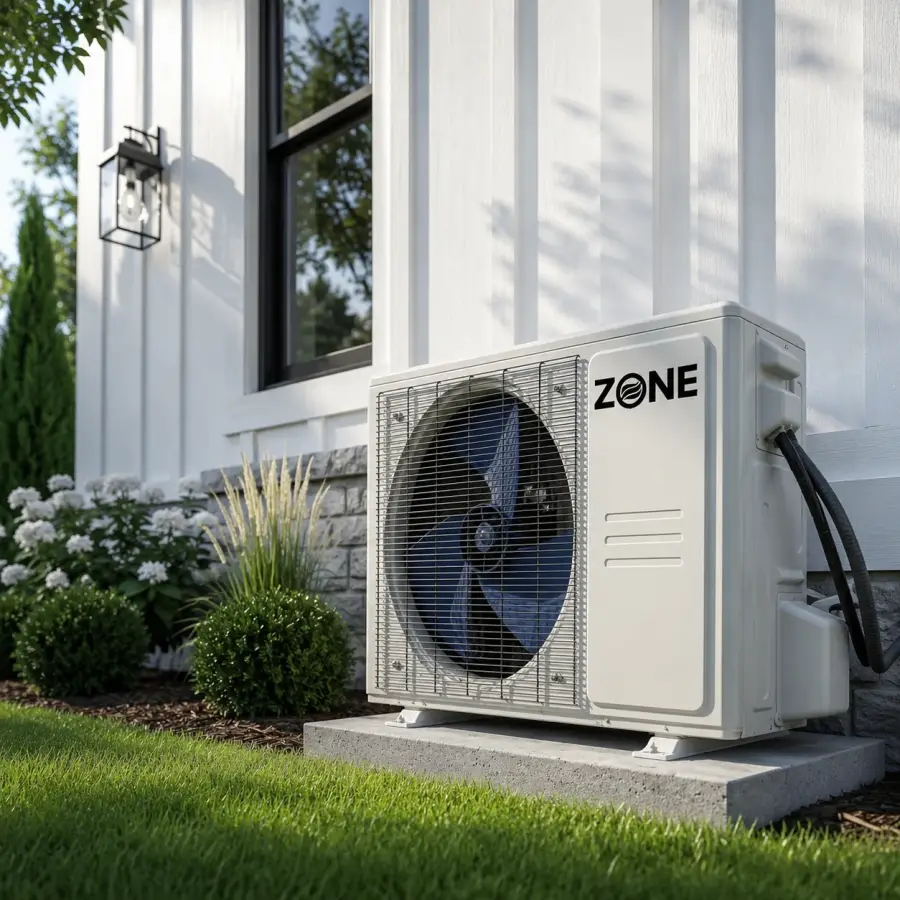
The MRCOOL DIY 5th Gen is a solid system that you can find easily as a DIY mini split. Most single zone sizes fall around SEER2 22.5–23.6 (the 36k is 18), and the 12k has an HSPF2 of 10.2, with heating operation rated down to −13°F. It's popular among DIYers because the installation process is simple, it has decent cold climate ratings, and you can find it at a lot of retailers. In October 2026 the 12k was $2,359 at Home Depot and the 18k was $2,910 at MRCOOL DIY Direct. Many models are Energy Star qualified.
That said, Zone Air's DIY Series is usually the better overall choice in 2026, especially if you are installing in a cold climate and you need a flexible line set length or simple electrical work. Both brands are true DIY mini split systems that use pre-charged line sets and quick connect fittings, so you don't need a vacuum pump and both are designed for a homeowner to install. Where Zone Air pulls ahead is in the details that affect long-term reliability: they build custom precharged line sets to your exact run length so there are no couplers on longer runs. They've got optional 115V plug-in kits on select models that can eliminate panel work where there's already a dedicated outlet and local code allows it.
The rest of this article looks at MRCOOL DIY 5th Gen performance, cold climate behavior and install experience against Zone Air and the other best DIY mini splits so you can choose with confidence.
Basics
How DIY Mini Splits Work
A DIY mini split system is a ductless heat pump that comes with pre-charged line sets and quick connect fittings so you can install it without handling refrigerant or using a vacuum pump. The indoor unit is mounted on a wall, is connected to an outdoor condenser through a refrigerant line and communication cable, and the sealed system is factory-charged and ready to run.
This is basically different from a "DIY-adjacent" unit that still needs flaring, nitrogen pressure testing and evacuation tools. Those steps usually need a licensed HVAC tech, which defeats the purpose for most DIYers.
Heat pumps move heat rather than creating it, which is why a DIY mini split can be 2–4x more efficient than electric resistance heaters or older window ACs. SEER2 ratings measure how efficient a mini split is at cooling, while HSPF2 ratings show how efficient a heat pump is at heating. Key DIY friendly features include the install kit (wall sleeve, mounting plate, brackets, drain), built-in Wi-Fi for app control and remote control access, and clear instructions that keep the project in the 4–8 hour range.
Both MRCOOL DIY 5th Gen and Zone Air DIY models are true DIY mini split systems. How far each brand goes to simplify electrical work and line set routing is where they differ.
MRCOOL
MRCOOL DIY 5th Gen Specs and Pricing
The MRCOOL DIY 5th Gen family has single zone units from 9k to 36k BTU and multi-zone condensers up to 55k BTU. MRCOOL announced it in May 2025 and it's the current DIY line in 2026. SEER2 ratings run from 23.6 on the 9k and 23.5 on the 12k down to 18 on the 36k. Many models carry Energy Star certification.
In the box you get the outdoor condenser, the indoor wall-mounted air handler, a remote and a 25 ft pre-charged Quick Connect line set (MRCOOL also sells fixed 11.5, 16, 25, 35 and 50 ft sets).
Warranty coverage on the MRCOOL DIY 5th Gen is 7-year compressor and 5-year parts, with no registration required. A lifetime compressor warranty is available through MRCOOL's paid Care Kit program with registration and ongoing maintenance signup, but labor is never covered.
The 9k and 12k BTU units in the 5th Gen run on 115V, and the 18k and larger run on 208–230V. MRCOOL's manual shows the power wired to a terminal block on the outdoor unit, not plugged in. So installs need a dedicated circuit and a hard-wired disconnect.
Cold Climate
MRCOOL DIY 5th Gen vs Zone Air in Cold Weather
Cold climates (zones 5–7, with regular lows below 10°F) are going to put any heat pump to the test. Headline numbers like SEER2 matter less than low-ambient heating capacity and how much output the system keeps as temperatures drop. Heating capacity goes down a lot as outdoor temperatures drop below 15°F, so buyers in deep cold need to look beyond the marketing sheet.
The DIY 5th Gen is rated for heating down to −13°F, and MRCOOL's DIY Hyper Heat is rated to −22°F. That is a decent rating. But like any heat pump in this class, heating output tapers as it gets colder, so a backup heat source is a good idea where temperatures stay below 0°F for long stretches.
With enhanced vapor-injection compressor technology, Zone Air units are rated for heating down to −13°F and are designed specifically for cold climate installs. This technology helps retain heating output into the low single digits. On paper both brands are rated to the same −13°F, so the low temperature rating by itself isn't the difference between them.
Custom-length precharged line sets also mean less coiled tubing behind the condenser on Zone Air equipment. Cold climate heat pumps should match low-temp capacity data to your actual design conditions, not just check a box for minimum operating temperature.
Low Ambient
Cold Climate and Low Ambient Heating Explained
"Cold climate" and "low ambient heating" can describe how much useful heat a heat pump still puts out when it's well below freezing outside. Electric resistance heat, like a baseboard heater, is basically one unit of electricity turned into one unit of heat. A heat pump moves heat from outdoor air instead, so it can deliver more heat than the electricity it uses, even in cold weather. When you're looking at a cold climate, the question is how far down that can keep working, and how much capacity you might have left when it gets there.
- The heating floor is the lowest outdoor temperature a unit is rated to run in heating mode. Zone Air and MRCOOL's standard DIY 5th Gen are both rated down to −13°F. That is the temperature where the unit still runs, not the temperature where it still makes its full rated output.
- Low-temperature capacity is what matters on the coldest nights. Heat output drops as the outdoor temperature falls, so a unit that covers your room at 47°F may fall short at 0°F. Manufacturers that put this out give capacity or efficiency at 17°F and 5°F. Zone Air's 12K, for example, lists a heating COP2 of 2.1 at 5°F, which means it still delivers about twice the heat of a resistance heater for the same electricity at that temperature.
- Your winter design temperature is the number you want to compare those ratings against. It is the temperature your area stays above on all but about 1% of winter hours. In ENERGY STAR's design temperature guide, the heating design temperature is −11°F for Minneapolis (Hennepin County) and Burlington, Vermont (Chittenden County), −2°F for Denver, −15°F for Fargo (Cass County, North Dakota) and −21°F for St. Louis County in northern Minnesota.
- Low ambient cooling is a different spec. It means the unit can cool when it's cold outside, which is useful for server rooms and sun rooms, but it says nothing about winter heating.
The NEEP cold-climate air source heat pump list puts out low-temperature capacity data by model, if you want to compare specific units beyond what a brand's spec sheet shows.
MRCOOL Tiers
MRCOOL DIY Tiers and Their Heating Floors
MRCOOL's DIY range isn't one product, and the heating floor depends on which line you buy. It's a good idea to always check the tier, not just the brand.
- DIY 5th Gen (the standard line, 9K to 36K): is rated to operate from −13°F in heating and up to 122°F in cooling. This is the line most people mean by "MRCOOL DIY," and it's the one this article shows you against Zone Air.
- Higher-tier DIY models: rated lower, down to −22°F, in 12K and 18K sizes on 208/230V only.
- DIY Easy Pro: a separate budget line with lower efficiency ratings, 19.5 to 20.2 SEER2 on the 9K and 12K. Don't assume it has the same −13°F rating as the 5th Gen. Check its own spec sheet before you buy it for a cold climate.
Zone Air publishes one heating floor across its range: every system is rated to heat down to −13°F, the same as MRCOOL's standard DIY 5th Gen.
Specs
Cold Climate Specs for 12K and 18K
| Spec | MRCOOL DIY 5th Gen 12K | MRCOOL DIY 5th Gen 18K | Zone Air 12K | Zone Air 18K |
|---|---|---|---|---|
| Voltage | 115V | 208/230V | 115V or 208–230V | 208–230V |
| Heating operates down to | −13°F | −13°F | −13°F | −13°F |
| Cooling operates up to | 122°F | 122°F | 131°F | 131°F |
| SEER2 | 23.5 | 22.5 | 23 (115V) / 24 (230V) | 23 |
| HSPF2 (Region IV) | 10.2 | 11.5 | 10.0 | 10.0 |
| Heating COP2 at 5°F | Not in catalog | Not in catalog | 2.1 | 1.8 |
| Rated room size | Up to 550 sq ft | Up to 800 sq ft | Up to 600 sq ft | Up to 900 sq ft |
| Quietest indoor setting | 18 dB(A) | 19 dB(A) | 30 dB(A) | 34 dB(A) |
| Line set | 25 ft in the box; 11.5–50 ft sets plus couplers | 25 ft in the box; 11.5–50 ft sets plus couplers | 16 ft in the box; custom 5–75 ft, one continuous run | 16 ft in the box; custom 5–75 ft, one continuous run |
| Price | About $2,359 at Home Depot (Sept 2026) | $2,910 at MRCOOL DIY Direct (Oct 2026) | $1,999.99 (115V) / $2,049.99 (230V) | $2,599.99 |
Sources: MRCOOL catalog and DIY 5th Gen manual. Zone Air 12K 115V, 12K 230V and 18K product pages, October 2026.
Two things stand out. On heating efficiency, MRCOOL's DIY 5th Gen rates higher (HSPF2 10.2 and 11.5 against Zone Air's 10.0), and MRCOOL's indoor units publish a quieter lowest setting. On the other side, Zone Air's 230V 12K has the higher cooling SEER2 (24), Zone Air publishes its 5°F heating efficiency, it cools in hotter outdoor temperatures, and it sends each line set as one run cut to your length.
Sizing
Sizing a Cold-Climate Mini Split
How do you get capacity right in a cold climate? Output falls as the temperature drops, so it matters more there than anywhere else. Too small and you're back to space heaters on the coldest nights. Too big and the unit short-cycles in mild weather and dehumidifies poorly in summer.
- Manufacturer room ratings are a starting point, not a cold-climate answer: MRCOOL rates its 9K, 12K and 18K DIY 5th Gen for up to 400, 550 and 800 sq ft. Zone Air has its 9K, 12K and 18K rated for up to 450, 600 and 900 sq ft. Insulation, windows, ceiling height and your design temperature shift those numbers, and our sizing calculator accounts for them by ZIP code.
- Voltage limits your choices at the bigger sizes. Both brands sell 9K and 12K on 115V, but their 18K units are 208–230V only, and MRCOOL's −22°F models are 230V only.
- A practical example: a 750 sq ft workshop with so-so insulation where winter nights drop to 0°F will be tight on a 12K unit. An 18K gives it the room to keep up on the coldest nights without running flat out.
Decision Guide
Choose by Your Winter Design Temperature
- Design temperature above −13°F (Denver, Boston, Chicago and most of the country): either Zone Air or MRCOOL's standard DIY 5th Gen is rated to keep running. Zone Air is our pick for its exact-length single-run line sets and the plug-in option on its lower-voltage models. Its 230V 12K is also rated at 24 SEER2.
- Design temperature near −13°F (Minneapolis, Burlington): both still run, but output is reduced at that point. You'd want to size up, or keep a backup heat source for the coldest nights.
- Design temperature below −13°F (Fargo, northern Minnesota, northern Maine): a unit rated only to −13°F will hit its floor some nights. Look at MRCOOL's higher-tier DIY models rated to −22°F, or a pro-installed cold-climate system, and keep backup heat either way.
- Line set longer than 50 ft: Zone Air's single continuous run skips the coupler MRCOOL needs past 50 ft.
- Only 115V available: both brands' 115V 12K units are rated to heat down to −13°F. MRCOOL's −22°F models need 230V.
Install
Installing MRCOOL DIY 5th Gen vs Zone Air
A typical DIY mini split install is going to follow these steps: mount the indoor unit on its mounting plate, drill a 3–3.5″ wall penetration, set the outdoor condenser on a pad or wall bracket, route the line set and communication cable, wire power, install the condensate drain and open the service valves. Installation time for DIY mini splits is usually 4–8 hours depending on experience and run complexity.
MRCOOL DIY 5th Gen uses pre-charged Quick Connect line sets that come in fixed lengths. No vacuum pump is needed. The convenience is real, but any excess line set length must be carefully coiled and supported outside. The longest set is 50 ft, and MRCOOL's manual lists a maximum pipe length of 75 ft for every size, with maximum elevation limits of 49.2 ft on the 9k and 12k, 65.6 ft on the 18k and 75 ft on the 24k and 36k. Going past 50 ft means joining two sets with a coupler. This adds more connection points. Each added joint is a potential leak point over time, and large coils of excess tubing are one more thing to route and support without kinking.
Taking a different approach, Zone Air builds their custom precharged line sets to order by the foot, so you install only the refrigerant line length you actually need. No mid-line couplers. Fewer joints. Less coiling. This matters most on longer runs where MRCOOL would need to couple multiple fixed-length sets together.
The electrical requirement is another key difference. MRCOOL DIY 5th Gen 9k and 12k units use 115V and are wired to a terminal block on a dedicated circuit, not plugged in.
With optional 115V plug-in kits on select single zone DIY models, Zone Air lets qualified homeowners plug into a dedicated outlet instead of opening an electrical panel, where local code allows it. For most DIYers, that is the simplest legal path to getting power to the system without hiring an electrician for panel work.
Both systems are designed so the stock DIY install with pre-charged line sets doesn't involve handling refrigerant. Any refrigerant work, which includes repairing leaks, recovering or custom charging, still needs an EPA Section 608-certified technician.
Efficiency
Efficiency and ENERGY STAR Ratings
MRCOOL DIY 5th Gen efficiency lands in the low 20s on SEER2 for the 9k to 24k sizes, well above the 15.2 SEER2 ENERGY STAR level. Higher SEER2 ratings lead to lower summer electricity bills, and many DIY mini splits achieve SEER2 ratings up to 24.
Reaching SEER2 up to around 24 on 230V models (23 on 115V) with competitive HSPF2, Zone Air DIY systems also focus on cold climate heating and practical install details like custom line sets and plug-in kits. Some premium non-DIY brands like Mitsubishi systems excel in cold climates with consistent output and may post even higher numbers, but those systems need professional install, vacuum pumps and a lot higher total project costs.
For real-world bills, the difference between SEER2 23.5 and 24 is small. What matters more is correct model choice, a tight building envelope and consistent low-speed inverter operation. Both MRCOOL and Zone Air systems provide this. Energy Star certification affects eligibility for state and utility rebates, so check that the exact model you're buying is certified. Rebates often depend on SEER2 and HSPF2 efficiency ratings, so check your local program requirements before you buy.
Efficiency targets for shoppers: aim for at least SEER2 20 and HSPF2 9.0 in moderate climates, and prioritize HSPF2 9.5–10+ in cold climates where heating is your main load.
Owner Feedback
MRCOOL DIY 5th Gen Owner Feedback
There is a lot of public feedback on MRCOOL DIY mini splits in the comments on YouTube install and owner videos. Owners often talk about the simple install and lower summer electricity bills compared with window units.
The problems DIY mini split owners bring up most are things like leaks at line set connections and Wi-Fi or app control glitches. Install quality drives many of these outcomes: improper torque on quick connect fittings, kinks in the line or poor condensate drain routing can all masquerade as equipment problems. MRCOOL's manual gives a torque value for each fitting size.
Zone Air's approach is meant to cut down on leak risk, because there are no mid-line couplers for longer runs and far less need to hide big coils of extra line set behind the unit. Reliable long-term performance starts with fewer potential failure points at install.
Treat YouTube and forum reviews as a supplement to reading spec sheets and warranty terms. They provide valuable insight into how the MRCOOL DIY 5th Gen behaves in garages, bonus rooms and small homes day to day.
Comparison
MRCOOL DIY 5th Gen vs Zone Air and Other DIY Options
In 2026, the DIY mini split market breaks into three groups: true DIY systems (MRCOOL DIY, Zone Air), brands with flare connections that still need a vacuum pump (Pioneer, Senville), and premium pro-install brands (Mitsubishi, Daikin) that need professional installation and deliver the highest installed cost.
| Feature | MRCOOL DIY 5th Gen | Zone Air DIY Series |
|---|---|---|
| SEER2 (12k single zone) | 23.5 | 23 (115V) / 24 (230V) |
| HSPF2 (12k) | 10.2 | 10–10.5 |
| Min heating temp | −13°F (DIY Hyper Heat −22°F) | −13°F |
| Line set approach | Fixed lengths (11.5–50 ft), couplers for runs past 50 ft | Custom cut to exact length, no mid-line couplers |
| 115V plug-in kit | No, wired to a terminal block | Optional on select models |
| Warranty | 7 yr compressor / 5 yr parts | 7 yr compressor / 5 yr parts |
| Equipment price (12k) | $2,359 (Home Depot, Oct 2026) | $1,999.99 (115V) / $2,049.99 (230V) |
MRCOOL DIY's strengths include name recognition, big-box availability and a deep library of install videos. With custom precharged line sets that eliminate coupler joints on longer runs, optional 115V plug-in kits that avoid panel electrical work, and an overall system design that is meant to reduce leak risk, Zone Air's advantages are best value for long-term reliability.
Lower-priced brands like Pioneer and Senville can save money on equipment cost but in our view are not true DIY mini split systems. Their line sets use flare connections that need a vacuum pump, and Senville says DIY installation will void your warranty coverage.
Use-case summary: pick MRCOOL DIY 5th Gen if you want something you can buy from a big-box store this weekend. Choose Zone Air if you want the easiest long-term DIY experience, the cleanest line set routing and the lowest joint-count split system, especially for cold climates or longer runs.
Licensing
Do You Need an HVAC License to Install a DIY Mini Split in 2026?
MRCOOL and Zone Air both design these systems for a homeowner to install, because the pre charged, sealed line sets mean you never open the refrigerant circuit. This is the entire premise behind both MRCOOL DIY 5th Gen and Zone Air DIY systems. Licensing rules are set by states and towns, so check yours before you start.
However, local code still applies. Permits may be required for running new 208–230V circuits, adding disconnects or drilling through fire-rated walls. Any work involving opening the sealed refrigeration system, like cutting line sets, adding custom flares, repairing leaks or recharging refrigerant, does require a certified technician by federal law. Cutting a pre charged line set from either brand lets the factory charge out and can void the warranty.
One practical advantage of Zone Air's custom-length line sets is that homeowners are far less tempted to cut or modify tubing, since the ordered line set length is already sized to the run. This keeps the install within the DIY safety and warranty envelope. If you're not comfortable with electrical work or panel modifications, hire a licensed electrician for that portion, even if the HVAC side is fully DIY.
Sizing
Choosing the Best DIY Mini Split Size and Setup
Sizing guidelines for common spaces:
- 9k BTU: ~300–400 sq ft
- 12k BTU: ~400–550 sq ft
- 18k BTU: ~600–800 sq ft
- 24k+ BTU: large open areas or multiple small rooms
In cold climates, poor insulation or vaulted ceiling situations, increase target capacity by 10–20%. Climate and building shell directly affect how hard your system works and how much power it draws.
Both MRCOOL DIY 5th Gen and Zone Air offer multi-zone condensers, but each added zone increases line set complexity and leak points. For the easiest DIY install and best performance, a single correctly sized unit per major space often beats stretching a multi-zone system with very long line runs. You can consult manufacturer sizing charts or a basic Manual J-style load calculator online. You can also run your square footage, climate zone and insulation through our sizing calculator.
Correct model choice helps both MRCOOL and Zone Air systems maintain high efficiency because they can run long, low-speed cycles instead of short cycling. Short cycling wastes electricity and speeds up wear on equipment.
Cost
Costs and Savings with DIY Mini Splits in 2026
DIY mini split systems cut out the installation labor you would pay a contractor for a conventional mini split, and labor is usually a big part of that quote. Equipment for a single zone MRCOOL DIY 5th Gen or Zone Air 12k–18k system runs about $2,000–$2,900.
The federal 25C tax credit for heat pumps was up to $2,000, but it ended for property placed in service after December 31, 2025. State and utility rebates are available for qualifying heat pumps in some areas. Many rebate programs need Energy Star certification for eligibility, so verify whether DIY systems like MRCOOL or Zone Air qualify in your area before counting on that incentive. Some programs also still need professional installation paperwork, so check the fine print. Solar-paired systems can further offset operating cost.
A high SEER2 mini split uses a lot less electricity than an old low-SEER unit. In moderate winter weather, the same system is supplementing or replacing heating at COPs of 2–3. This undercuts electric resistance heat a lot.
With custom-length line sets and fewer joints, Zone Air's design is meant to keep refrigerant leaks from eating into those savings.
FAQ
MRCOOL DIY 5th Gen vs Zone Air FAQ
Is the MRCOOL DIY 5th Gen good for cold climates?
DIY mini splits can operate in temperatures as low as −13°F, and the 5th Gen carries that rating. It performs well in mild and moderate cold, but like any heat pump at this rating it can need a backup heat source in severe winter conditions. Zone Air is rated to the same −13°F, and its edge is fewer line set joints on long runs.
What makes Zone Air easier to install than MRCOOL?
Custom precharged line sets eliminate mid-run couplers and excess coiling. Optional 115V plug-in kits on select models reduce or eliminate the need for panel electrical work. Fewer joints mean fewer tools needed and less long-term leak risk.
Which DIY mini split is truly DIY friendly?
Of the brands compared here, MRCOOL DIY 5th Gen and Zone Air are the ones intentionally designed for full homeowner installation without a vacuum pump or professional install. Many other brands use flare connections that need a vacuum pump, and some require a professional install to keep the warranty.
Can I extend MRCOOL DIY 5th Gen line sets?
Yes, with a coupler kit and a second pre-charged set, up to the maximum run MRCOOL lists for your unit. Each coupler adds another connection and another potential leak point. Zone Air ships a single-piece custom line set to the exact length needed, avoiding that issue completely.
What's the best DIY mini split system for 2026?
For you, if you're seeking the best mix of performance, cold climate reliability, quality equipment and the easiest install, Zone Air's DIY Series is the top pick. MRCOOL DIY 5th Gen stays a solid second choice where local availability or specific brand familiarity wins out.
How cold can a Zone Air DIY mini split heat?
Every Zone Air system is rated to heat down to −13°F outdoor temperature. The 12K lists a heating COP2 of 2.1 at 5°F and the 18K lists 1.8, according to its product pages.
Which has better HSPF2 for cold climates, MRCOOL DIY 5th Gen or Zone Air?
MRCOOL, slightly. Its DIY 5th Gen 12K is rated at HSPF2 10.2 and its 18K is rated at 11.5 in Region IV, against 10.0 for Zone Air's 12K and 18K. Zone Air's 230V 12K is higher on cooling (24 SEER2 vs 23.5).
Is a 115V mini split OK for cold climates?
It can be. Zone Air's 115V 9K and 12K and MRCOOL's 115V DIY 5th Gen 9K and 12K are all rated to heat down to −13°F. What you give up on 115V is size, since both brands' 18K units are 230V only.
Can you use a ceiling cassette in a cold climate?
Yes. Zone Air's ceiling cassette carries the same −13°F heating rating as its wall units, and as of October 2026 Zone Air is the only DIY mini split that can mix wall, cassette and concealed ducted indoor units on one multi-zone outdoor unit (system builder). MRCOOL's DIY multi-zone condensers pair wall units with its OuttaSight ceiling cassette.
Related guides
- Top DIY mini split heat pumps ranked for 2026
- Mini split operating temperature ranges by brand
- Best DIY mini split warranty: MRCOOL vs Zone Air
- Best DIY easy-install multi zone mini split
- What Is SEER2? Efficiency ratings explained
- Best quick connect mini split
- Best mini split for bedroom
Rankings on this page are our opinion. MRCOOL specifications, prices and warranty terms are taken from MRCOOL's own published documents and the retailer listings linked above as of October 5, 2026 (October 16, 2026 for the cold-climate, tier, spec-table, sizing and design-temperature sections) and are subject to change; verify before purchase. MRCOOL®, Pioneer®, Senville, Mitsubishi and Daikin are trademarks of their respective owners. This site is owned and operated by Zone Air and is not affiliated with or endorsed by MRCOOL, Pioneer, Senville, Mitsubishi or Daikin.