If you want heating and cooling without ripping into walls for ductwork, the best DIY mini split heat pump is probably the fastest way to get year-round comfort. This guide looks at the top brands, walks you through sizing and installation, and can help you figure out which system fits your home, garage or shop.
Top Picks
Best DIY Mini Split Heat Pumps for 2026
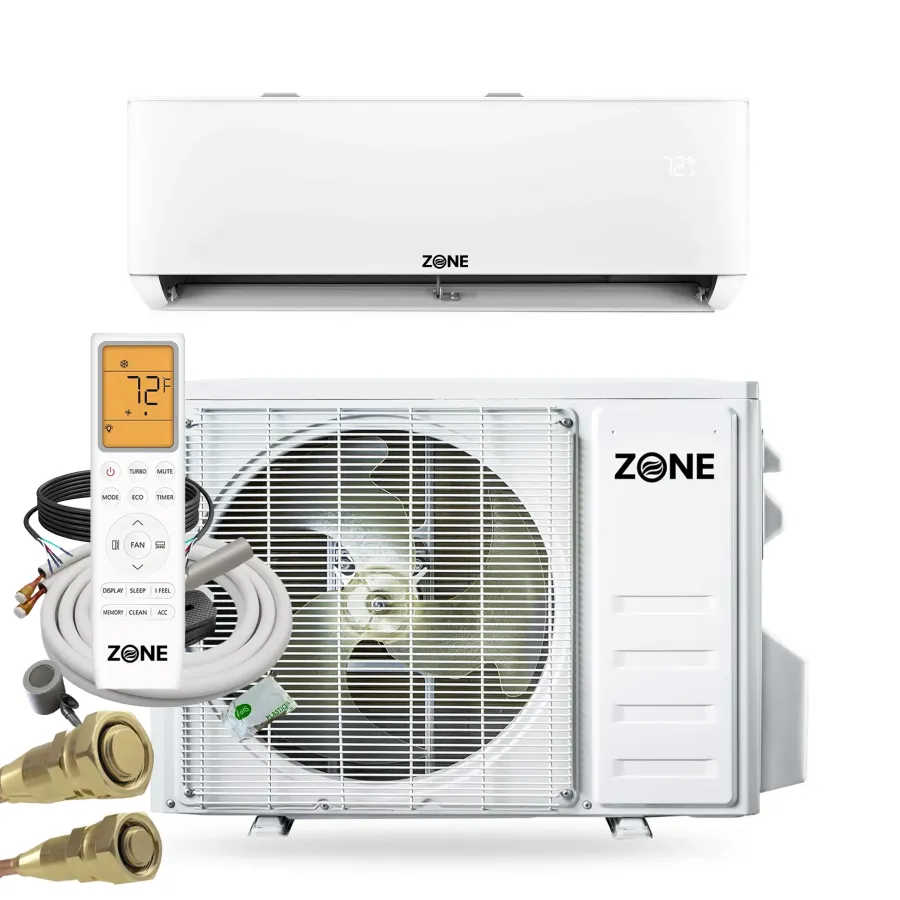
Before we get into the details, here are the models that might be worth your money right now. DIY mini splits come in several sizes, and the table below focuses on similar 12K single-zone units so you can compare the specs directly.
| 12K single zone | SEER2 | Power | Line set | Low-temp heating | Price |
|---|---|---|---|---|---|
| Zone Air 12K 230V | 24 | 230V | Pre-charged quick-connect, single run up to 75 ft (custom cuts available) | Heats down to −13°F | $2,049.99 |
| Zone Air 12K 115V | 23 | 115V, dedicated 15A circuit (optional cord kit) | Pre-charged quick-connect | Heats down to −13°F | $1,999.99 |
| Pioneer Diamante Pro 12K 115V | 20 | 115V | Flare connections, needs a vacuum pump; 16 ft copper kit, pre-charged up to 25 ft | Operates to −4°F | $888 (sale) |
| Pioneer Quantum Hyperformance 12K | 25 | 208/230V | Flare connections, needs a vacuum pump; pre-charged up to 25 ft | Operates to −22°F | $1,363 (sale, with 10 ft line set) |
| Senville AURA 12K | 25.4 | 208/230V | Flare connections, needs a vacuum pump; pre-charged up to 25 ft | Operates to −22°F | $1,399.99 |
Specs from each manufacturer's own product pages (linked in the table); prices are each brand's own site as of October 2026 and change often.
Key points from the table:
- Zone Air isn't the cheapest box here. Its 12K lists at $1,999.99 at 115V, while Pioneer's Diamante Pro 12K 115V was on sale for $888 as of October 2026. What the extra money buys is the pre-charged quick-connect line set, so there's no vacuum pump, gauges or flare work. On efficiency, Zone Air's 23 to 24 SEER2 sits above the Diamante Pro's 20 and just under the Quantum Hyperformance's 25.
- Zone Air's custom-cut, pre-charged single-run line sets from 5 to 75 ft mean one pair of quick-connect fittings per zone. Pioneer and Senville use flare connections instead, and Pioneer's own self-install guide lists a flaring tool, a torque wrench and a vacuum pump (or its Kwik-E-Vac kit) among the tools you need.
- Mini split heat pumps that are built for cold climates have a rating that shows they work at low outdoor temperatures. If you live in colder climates, look for hyper heat models rated to at least −13 °F. ENERGY STAR keeps a separate cold climate heat pump label for this.
- Best fit by use case: garages and shops do well with a 9–12K 115V single zone. Additions and bonus rooms pair nicely with a 12–18K unit. Whole-home multi-zone setups can benefit from Zone Air's mix-and-match heads, since you can put wall, cassette and concealed ducted air handlers on one condenser. Zone Air's 230V models reach 24 SEER2. Many models also achieve high HSPF2 efficiency ratings for heating (see what SEER2 and HSPF2 mean).
Basics
How DIY Mini Split Heat Pumps Work
A DIY mini split is a ductless heat pump that is designed so you can install it yourself without handling refrigerant. The system comes from the factory pre-charged with quick-connect line sets, which means there is no vacuum pump and no brazing.
A mini split system has two main parts: the outdoor unit (condenser/heat pump) and the indoor unit (air handler), connected by a copper line set that carries refrigerant, plus a condensate drain and a control cable. Mini splits provide efficient heating and cooling without ductwork, which avoids duct leakage. ENERGY STAR says that in a typical house about 20 to 30 percent of the air moving through the ducts is lost to leaks, holes and poorly connected ducts.
Heat pumps move heat rather than generating it. In cooling mode, the indoor unit absorbs room heat and sends it outside. In heating mode, the system pulls heat from outdoor air - even below 0 °F on hyper heat models - and delivers it inside. An indoor mini split head doesn't distribute heat like a central furnace does, so you should think about air circulation patterns in the room when you're choosing where to mount it.
These systems use inverter-driven compressors that change speed instead of just cycling on and off. The efficiency of mini split systems is measured by SEER2 for cooling and HSPF2 for heating, with ENERGY STAR keeping a standard for efficiency ratings and cold-climate labels. High-efficiency mini splits often use less electricity than traditional HVAC because they get rid of duct losses completely.
Zone Air's DIY heads run 9,000 to 18,000 BTU per zone with multi-zone condensers supporting multiple indoor units. Pioneer's Quantum Hyperformance single zones run 9,000 to 24,000 BTU.
Brands
Best DIY Mini Split Brands in 2026
This section looks at the top DIY mini split brands based on efficiency, line set design, ease of installation, cold-climate performance, price and user reviews. The market has multiple brands offering DIY mini splits with varying levels of support and efficiency - here's how they stack up.
Zone Air (Our Pick)
Zone Air is the best DIY mini split heat pump option for most homeowners. It has up to 24 SEER2 efficiency (230V models). Pre-charged, custom-cut single-run line sets from 5 to 75 ft mean no extra copper coiled behind the outdoor condenser and no doubled quick-connect leak points. Zone Air's mix-and-match multi-zone capability lets you combine wall units, ceiling cassettes and concealed ducted air handlers on a single condenser, with room to add heads later. The 115V models are designed for easy installation: they run on a dedicated 15A circuit, and an optional cord kit plugs into a GFCI outlet where local code allows (never an extension cord) - so a garage, shop or bonus room doesn't need a new 230V line. Prices start at $1,999.99 for a 12K single zone (115V, 23 SEER2; the 24 SEER2 230V model is $2,049.99), and average user reviews sit at 4.8 out of 5 across 141 verified buyers.
Pioneer (Lowest Sticker Price)
Pioneer has the lowest sticker price in the table above and sells direct from its own site. Its Diamante Pro 12K is rated 20 SEER2 and heats down to −4°F, and the Quantum Hyperformance 12K steps up to 25 SEER2 with low-ambient heating down to −22°F (230V only). The outdoor units come pre-charged for up to 25 ft of line. The catch for a DIYer: these are flare-connection systems, and Pioneer's Diamante Pro product page says you have to remove the air from the lines with a vacuum pump before releasing the refrigerant, so in our view they're not fully DIY in refrigerant terms. Pioneer's warranty is 1 year unless you register the unit, up to 5 years once you do, and labor isn't covered.
Senville (Budget Choice)
Senville is a budget-friendly pick sold direct and on Amazon. Its AURA series markets low-ambient heating down to −22 °F and a 12K rating of 25.4 SEER2, but Senville systems use flare connections that need a vacuum pump and flaring tools, so they're not fully DIY in refrigerant terms - and Senville says professional installation is required to keep the warranty. Good for cost-conscious projects where you're ready to hire a tech for line-set work.
Pro-Install Baseline (Mitsubishi, Daikin, Fujitsu)
These ductless mini split brands offer excellent performance and ultra-quiet operation but almost always need professional installation. Installed cost runs higher than a DIY mini split because you're paying a contractor for labor - get a local quote to see the gap. Efficiency is similar or higher, but so is the total investment.
Comparison
Zone Air vs Pioneer vs Senville Features
This section is looking directly at the most-shopped DIY mini split systems on the factors that matter most during your install.
- Line sets: Zone Air offers custom single-run pre-charged line sets from 5 to 75 ft with one pair of quick-connect fittings. Pioneer and Senville ship copper line sets with flare connections. The outdoor unit is pre-charged (up to 25 ft of line on the 12K models above), but the lines themselves have to be vacuumed down before you open the valves. So that's a vacuum pump and a torque wrench on your tool list. This is a structural difference, not a marketing claim.
- Indoor unit flexibility: Zone Air supports wall, cassette and concealed ducted heads on a single outdoor condenser. Senville sells multi-zone kits too, but they use flare connections.
- Efficiency: Zone Air has a peak of 24 SEER2 (230V), and its 115V 12K is 23. Pioneer's Diamante Pro 12K is 20 SEER2, while its Quantum Hyperformance 12K is rated higher at 25. Senville's AURA 12K is also rated higher at 25.4 SEER2. Both of those use flare connections, while Senville's LETO 12K is 21.3 SEER2 at 230V (21.2 at 115V).
- Voltage: Zone Air's 115V option with a plug-in cord kit removes an electrical barrier for garages, shops and additions. Pioneer's Diamante Pro 12K also comes in a 115V version; its Quantum Hyperformance line is 230V, as is the Senville AURA 12K.
- Installation complexity: Zone Air is fully DIY with pre-charged, no-vacuum line sets. Pioneer and Senville need vacuuming and flare connections like professional mini split systems. Installation needs basic tools and no specialized training for true DIY brands.
- Reviews and support: Zone Air averages 4.8/5 with responsive U.S.-based support by phone and email. Warranty conditions differ too: Pioneer's coverage is 1 year unless you register, and Senville says professional installation is required to keep its warranty. You can compare for yourself on their sites.
Sizing
How to Size a DIY Mini Split
"What size mini split do I need?" is the most common question, and getting it wrong can hurt both ways. If you under-size a mini split, it won't be able to reach the temperature you want, and if you over-size it, the unit will short cycle, which creates humidity problems and shortens how long the equipment lasts (here are the signs a system is the wrong size). The ACCA Manual J load calculation is recommended for accurate HVAC sizing - our free mini split sizing calculator follows that method - but here are high-level BTU guidelines:
- 9,000 BTU: rooms from about 250–400 sq ft with good insulation and standard 8 ft ceilings
- 12,000 BTU: about 350–550 sq ft (typical bedroom, home office, small garage, bonus room) - Pioneer recommends its 12K for 350–500 sq ft and Zone Air rates its 12K for up to 600
- 18,000 BTU: open areas or large garages and shops from about 600–900 sq ft (see our 750 sq ft sizing guide)
- 24,000+ BTU: larger open plans, small apartments or multiple rooms served by one air handler
Square footage is only a starting point. Think about room features like ceiling height and sun exposure when you're sizing. Factors that push you up or down include climate zone, insulation quality, window count and exposure (south- and west-facing glass increases cooling load), and room use intensity. How the calculator works shows how each of those moves the number, and the tons-to-BTU guide helps if a quote is written in tons.
For multi-zone systems, one outdoor condenser supports 2–6 indoor air handlers each sized for their specific space. The condenser's total BTU capacity must match the combined zone ratings, with some oversubscription allowed by design. Hyper heat models often have separate "max BTU at 5 °F" or "at −13 °F" ratings - those numbers matter more than the listed output if you live in a cold climate.
Install
Installing a DIY Mini Split
Even though DIY mini split systems are designed for homeowners, you still must follow electrical codes, local permitting and manufacturer instructions. You must check the proper electrical requirements, including voltage and amperage for mini split systems. A dedicated electrical line is necessary for mini split installation. Here's the high-level process:
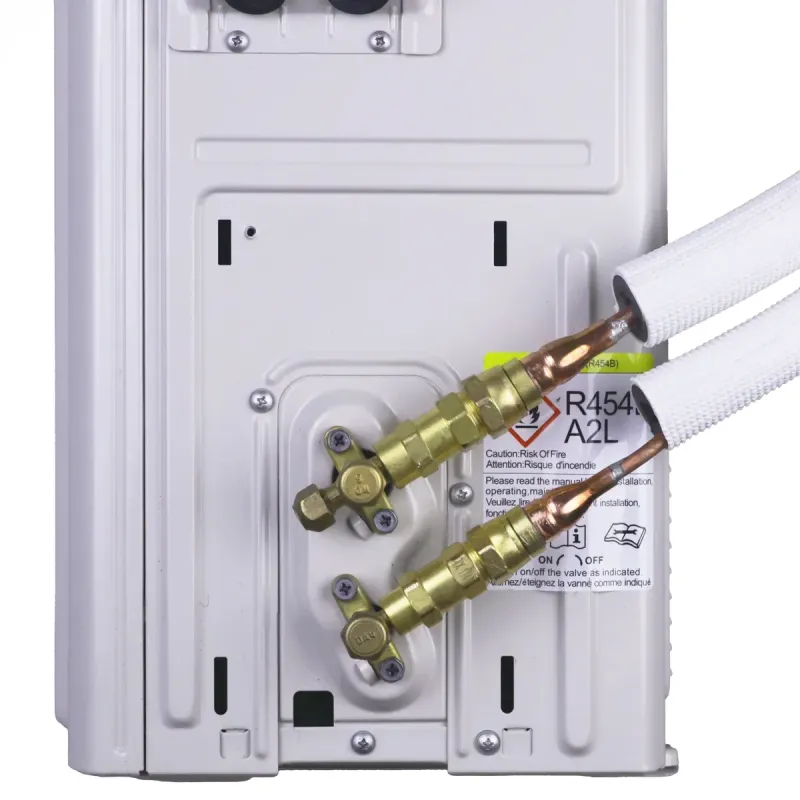
- Choose location: Pick an exterior wall for the indoor air handler with a clear path to the outdoor unit, staying within the line set distance limits.
- Mount the indoor unit: Use the provided template. Make sure it's level, anchored properly and has airflow clearance. A remote sensor or wall-mounted control helps fine-tune temperature readings.
- Drill the line set hole: Usually 2.5–3.5 inches (check your manual) with a slight downward slope to the outside. Condensate drainage options for cooling are important - gravity drainage is preferred when possible.
- Prepare the outdoor condenser site: Concrete pad or wall bracket with clearance for airflow and maintenance.
- Run the line set: Route pre-charged copper lines, control wire and drain line through the wall. Protect with UV-resistant line hide or conduit.
- Connect quick-connect fittings: Follow torque and sealing procedures. Zone Air's single-run custom-length sets reduce connections and potential leak points.
- Electrical hook-up: Connect power (a dedicated 15A circuit or the optional cord kit into a GFCI outlet for Zone Air 115V models where code allows; 115V or 230V on the others, depending on the model).
- Start-up and testing: Power on, run cooling and heating tests, check for unusual noises and proper drainage. Give yourself the better part of a day for a first install.
Avoid tight bends that could kink copper. Secure drain lines with proper slope. DIY installs with pre-charged lines (like Zone Air's) don't need a vacuum pump or refrigerant gauges.
Layout
Single-Zone vs Multi-Zone DIY Mini Splits
Choosing between a single-zone and multi-zone mini split system is one of the first decisions, and it affects cost, comfort and installation complexity. Mini split systems can be single-zone or multi-zone.
- Single-zone: One outdoor condenser matched to one indoor air handler. Ideal for a garage, shop, home office or addition you want to heat and cool independently. Simpler install, lower cost.
- Multi-zone: One outdoor unit serving 2–6 indoor air handlers. Multi-zone systems connect multiple indoor units to one outdoor unit, giving room-by-room temperature control without ductwork. Good for whole-home updates or homes without existing ducts.
Zone Air's mix-and-match approach stands out: combine wall-mounted, ceiling cassette and concealed ducted air handlers on a single multi-zone condenser and add heads later as your needs grow. Multi-zone line runs are more complex - more line sets to run, more fittings - which makes Zone Air's custom-run lengths and fewer unions particularly valuable. The calculator's Room(s) mode sizes each zone separately.
Bottom Line
Is a DIY Mini Split Heat Pump Right for You?
DIY mini splits can improve home comfort and energy efficiency while reducing installation costs. Doing the install yourself means you aren't paying a contractor's labor bill, which is usually the biggest part of an installed quote. But they're not the right fit for every situation.
- Good candidates: Homeowners comfortable with basic tools (drill, level, hole saw), people adding climate control to garages, shops, bonus rooms or older homes without ducts, and anyone able to pull permits or hire an electrician for circuit work.
- Consider a pro install: Complex multi-story runs, very long distances beyond typical DIY line limits, or strict HOA rules on exterior equipment.
- Hybrid approach: Many people self-install mounting and line runs, then pay a local tech to review connections and power-up for peace of mind.
When you're ready to buy, prioritize systems with higher SEER2, strong cold-climate performance and robust line set design with fewer quick-connect joints. If you want the combination of top-tier efficiency (24 SEER2), simpler custom line sets, a 115V plug-in option and multi-zone flexibility, Zone Air is the pick for most homeowners shopping for the best DIY mini split heat pump in 2026. You can learn more about their models, photos and spec sheets on their site, then find the configuration that fits your space.
Related guides
- Best quick connect mini split
- Mini split operating temperature ranges by brand
- Best DIY mini split heat pump for heating and cooling
- What Is SEER2? Efficiency ratings explained
- Best DIY mini split for 750 sq ft
- AC tonnage: tons to BTU
- Mini split sizing FAQ
Specifications, prices, and warranty terms are manufacturer- or retailer-published as of October 2026 and subject to change; verify before purchase. Pioneer® and Senville are trademarks of their respective owners. This site is not affiliated with or endorsed by Pioneer or Senville.