If you want to heat and cool a single room without running new 230V wiring or hiring an HVAC crew, the best 115V DIY mini split (sold as 110V or 120V too) is one that uses a factory pre-charged line set with a plug-in power option. This guide covers Zone Air's 115V plug-in models, shows how they compare to MRCOOL's 115V DIY units, and helps you get the right size and voltage for your space.
Quick Answer
Best 120V DIY Mini Split in 2026
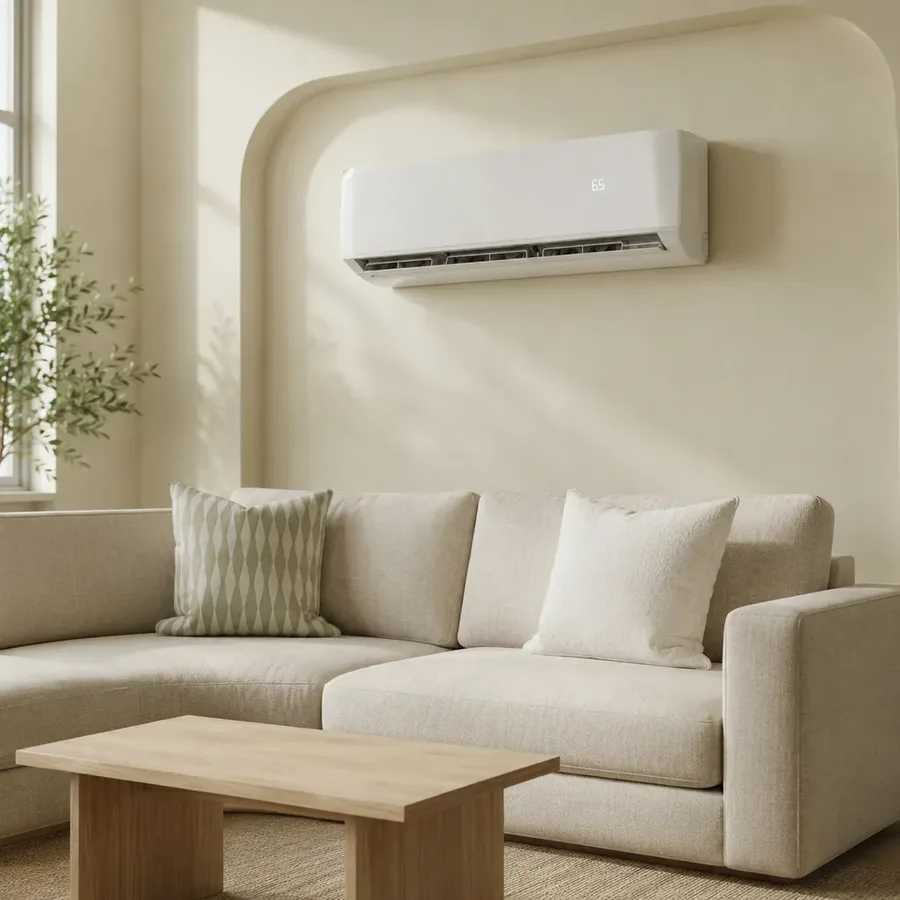
Zone Air's 9,000 BTU and 12,000 BTU 115V wall mount heat pumps are our pick for homeowners who want a single zone unit they can install themselves. They run on a standard 110–120V dedicated 15A circuit, ship with a pre charged line set, and Zone Air sells an optional cord kit that turns them into a plug-in install where local code lets you.
The specs: the cooling efficiency is 23 SEER2, the EER2 is 13, the HSPF2 is 10.0 in Region IV, and the unit can heat down to −13°F. The factory pre-charged line set is filled with R-454B refrigerant, so you don't need a vacuum pump, refrigerant gauges or EPA certification. You don't need any special certification to install these systems yourself, you just need basic tools, a free weekend and a plan.
Quick Picks
Top 115V / 110V DIY Mini Split Picks for 2026
If you want a quick recommendation before you read the full guide, these are the top 115V DIY mini split options for 2026:
- Zone Air 12,000 BTU 115V DIY: Our top pick for single rooms that are up to about 550 sq ft. It's rated 23 SEER2 and heats down to −13°F, runs on a dedicated 15A circuit, and you can make it a plug-in install with the optional 3-prong NEMA 5-15P cord kit where local code lets you. With the Zone Air system, you get a 16 ft pre charged R-454B line set in the box, and you can get custom-cut lengths from 5 to 75 ft. What's the price? It's $1,999.99 as of October 2026.
- Zone Air 9,000 BTU 115V DIY: This is the top pick for smaller bedrooms and offices that are under about 400 sq ft. It has the same 23 SEER2 cooling efficiency, the same −13°F heating floor. The same optional cord kit. It is priced at $1,899.99 as of October 2026.
- MRCOOL DIY 5th Gen 12K 115V: A solid alternative at 23.5 SEER2 with heating rated to about −13°F. It comes with a 25 ft pre charged Quick Connect line set. Because it is hard-wired to a terminal block on a 20A-max outdoor circuit, you need a dedicated circuit run from your panel and potentially a licensed electrician.
- Pioneer or Senville 12K 115V (flare-connection): These are budget options for experienced DIYers who already own a vacuum pump, manifold gauges and flaring tools. Pioneer has 12,000 BTU systems for under $900. With these, the upfront cost is lower, but you'll need refrigerant handling skills and more equipment to install it.
Why does 115V matter for DIY installation? With a standard 115V DIY mini-split system, you get to use the same current you already have in your house. That means there is less electrical work to do. You don't need double-pole breakers, and you don't need to run heavy-gauge cable like you would with 230V equipment. Of the brands compared here, Zone Air is the only DIY mini split brand offering a 115V cord kit that goes into a dedicated GFCI outlet rather than requiring hard-wired electrical work (as of October 2026).
Basics
What Makes a 120V DIY Mini Split Different?
With a 120V ductless mini split, you get a wall mounted heat pump that runs off standard household voltage, usually 115V from a dedicated circuit. Unlike window units that block light and shake, or central air extensions that need ductwork, it delivers quiet, efficient heating and cooling through a compact indoor air handler connected to a small outdoor unit.
Most mini split systems on the market need 208–230V power, which means a new double-pole breaker, heavier gauge wiring and often a licensed electrician. 120V systems use a dedicated 15A or 20A circuit, the same kind already found in most homes, and that difference removes the biggest electrical barrier to a true DIY install.
Modern ductless systems can use inverter driven compressors to adjust output rather than cycling on and off. The result is higher efficiency ratings (measured by SEER2 for cooling and HSPF2 for heating) and more even room temperatures. 120V models work well in bedrooms, home offices, finished garages and bonus spaces where running 230V wiring is expensive or just not worth it. Compare that to hard-wired DIY systems: even when the line set is pre charged, you still need an electrician to wire a 230V circuit.
True DIY
What Makes a Mini Split DIY in 2026?
You'll see the term "diy mini split" on everything from systems that don't need any tools at all, to units that need brazing torches and EPA 608 certification. Here's what separates the levels.
Real DIY mini split systems have three things in common:
- The line sets come pre-charged and sealed at the factory with refrigerant inside them (R-454B in the current models). You don't need a vacuum pump, manifold gauges or any refrigerant handling on your end.
- Quick-connect fittings that are engineered to seal without field-made flares. These systems don't need a vacuum pump either. They're designed for DIY installation without special tools.
- Clear installation manuals and video guides that are easy for you to follow as a first-time installer.
Three levels exist in 2026:
- True DIY quick-connect: Of the brands we compared, that's Zone Air and MRCOOL DIY 5th Gen. You don't need HVAC tools for the refrigerant circuit. These DIY mini splits can be installed without HVAC licenses where local code lets you.
- "DIY-leaning" flare systems: Pioneer, Senville and similar brands. These traditional systems need refrigerant handling and evacuation, so you need a vacuum pump, flare kit and nitrogen. Traditional mini splits give you more indoor unit design options, but the install is harder.
- Contractor-grade systems: Large-capacity units and most multi zone systems that are always installed by a professional.
Even true DIY systems still mean mounting the indoor unit and the outdoor condenser, drilling a hole through the wall for the line set, running a condensate drain that actually has slope, and checking that all the electrical connections are right. Installing a mini-split is hard physical work and you have to be careful with the line sets. With the cord kit, Zone Air's 115V models push DIY a bit further because they remove most of the on-site electrical work for the 9K and the 12,000 BTU sizes.
Why Zone Air
Why Zone Air Leads 120V Plug-In DIY Mini Splits
By default, Zone Air's 115V systems are hardwired to a dedicated 15A branch circuit, and Zone Air sells a $49.99 3-prong 115V power cord kit separately: a 6 ft, 12 AWG cord with a standard NEMA 5-15P plug on one end that connects to the outdoor unit's terminal block on the other. With the cord kit, the system can plug into a dedicated 15A GFCI outlet with a weatherproof in-use cover. Zone Air says to use the cord kit only where local electrical and building codes let you do a plug-in install.
MRCOOL's DIY 5th Gen 9K and 12K units also run on 115V. MRCOOL's installation manual calls for a 115V individual branch circuit with 12 AWG wire and a 20A maximum fuse or breaker size, and says all wiring must be installed by a licensed electrician. MRCOOL's catalog doesn't list a cord kit for its DIY 5th Gen units.
Zone Air's systems go through final assembly, testing, and inspection in the USA. The sealed R-454B quick connect line sets are charged at the factory and matched to the outdoor unit, so the refrigerant circuit stays closed from the factory floor to your wall.
Here are the key points that set Zone Air apart:
- Plug-in power option: a NEMA 5-15P cord kit for a dedicated 15A GFCI outlet where local code lets you
- Pre charged R-454B line sets: you don't have to handle refrigerant, use a vacuum pump or read gauges
- Cold climate performance: heating is rated to −13°F
- Warranty coverage: 7-year compressor, 5-year parts and a DIY installation never voids it
- US-based support: spec sheets, a full installation manual and sizing tools
- Custom-cut line sets: of the brands compared here, Zone Air is the only one that cuts the pre charged line set to the exact length you measure, any whole foot from 5 to 75 (as of October 2026), as one factory-sealed run with no field joint
- Efficiency at 230V: on 230V, Zone Air has the highest-efficiency pre-charged quick-connect DIY system out of the brands compared here at 24 SEER2 (MRCOOL's best single-zone is 23.6). What you should know is that the 115V units are 23 SEER2, and that is a touch below MRCOOL's 115V 23.5 and 23.6
- Hot-weather cooling: the cooling rating goes up to outdoor temperatures of 131°F, and MRCOOL publishes 122°F
- Room to grow: if you need more than a single room later, Zone Air's multi-zone line is the only DIY mini split that lets you mix wall-mount, ceiling cassette and concealed ducted units on one outdoor unit (as of October 2026)
Specs
Zone Air 120V Plug-In Specs and Use Cases
Zone Air has two 115V wall mount models: a 9,000 BTU and a 12,000 BTU single zone heat pump. Both are built for a single room and ship with the 16 ft pre charged line set, mounting plate and remote.
| Spec | 9,000 BTU Model | 12,000 BTU Model |
|---|---|---|
| SEER2 | 23.0 | 23.0 |
| EER2 | 13.0 | 13.0 |
| HSPF2 (Region IV / V) | 10.0 / 8.6 | 10.0 / 8.6 |
| COP at 47°F / 5°F | 3.81 / 2.1 | 3.81 / 2.1 |
| Min. heating temp | −13°F | −13°F |
| Voltage | 110–120V, 60 Hz | 110–120V, 60 Hz |
| Breaker | 15A single-pole | 15A single-pole |
| Included line set | 16 ft pre charged | 16 ft pre charged |
| Indoor noise (mute to turbo) | 30–46 dB(A) | 30–46 dB(A) |
| Outdoor noise | 52 dB(A) | 52 dB(A) |
| Recommended room size | 250–450 sq ft | 350–600 sq ft |
| Price | $1,899.99 | $1,999.99 |
Both models heat down to −13°F, which makes them an option for cold weather zones as well as mild ones.
Real-world use cases: a bonus room over a detached garage, a finished basement guest room where extending central ductwork is just not worth it, a workshop in a cold climate, or a home office that needs year-round comfort without touching the main HVAC system.
Line Sets
How Official 120V Pre-Charged Line Sets Work
A pre charged line set is a pair of copper refrigerant lines (liquid and gas) that are factory filled with R-454B, sealed and leak tested before they leave the factory. R-454B has a lower global warming potential than the R-410A it replaces.
Quick connect fittings on Zone Air's line sets match the indoor and outdoor unit connections. You position both units, route the lines through the wall, start each fitting by hand, and tighten it to spec with two wrenches. There are no manifold gauges, no vacuum pump and no flaring kit.
The 16 ft line set is included with the 115V systems. Standard longer lengths are 25, 33, 50 and 75 ft, and Zone Air will cut any custom length from 5 to 75 ft, so you don't have to coil excess line behind the condenser. For the 9K and 12K systems the limits are a 75 ft run and a 33 ft height difference between the units. Every length up to 75 ft is one continuous pre-charged run, not an extension, so no one has to adjust the charge on site. For comparison, MRCOOL sells its Quick Connect line sets in fixed 16, 25, 35 and 50 ft lengths (plus a newer 11.5 ft set). Pre charged lines can't be cut or joined without breaking the factory seal and voiding the warranty, so measure your route carefully before ordering: wall depth, the rise to the indoor unit, and the horizontal run to the outdoor unit.
Cold Climate
120V Mini Split Heating in Cold Climates
Modern cold climate ductless heat pumps can serve as a primary or secondary heat source in regions that routinely see sub-zero temperatures. Standard heat pumps lose output as outdoor temperatures drop, but inverter driven units keep working well below freezing.
Zone Air's 115V systems can heat down to −13°F. Their HSPF2 of 10.0 means about three times as much heat per kilowatt-hour over a heating season as electric resistance heat, which delivers 3.41 BTU per watt-hour. The rated COP is 3.81 at 47°F and 2.1 at 5°F, so even at 5°F the unit is putting out about twice the heat of a baseboard heater drawing the same power.
Other DIY brands also handle cold weather. MRCOOL's standard DIY 5th Gen operates down to −13°F in heat mode, and its separate DIY Hyper Heat model operates down to −22°F.
Practical advice: how do you size it? You'll want to size it to the heating load, not just cooling. With an insulated 400-550 sq ft room with 8 ft ceiling height, a 12,000 BTU unit handles most cold snaps. Plan for backup heat (existing furnace, portable heater) if your region regularly drops below −15°F.
In cold weather, expect defrost cycles to kick in periodically. The outdoor unit briefly switches to melt ice off the coil, then goes back to heating. Below the minimum operating temperature, you'll want backup heat.
Practical example: a 400 sq ft bedroom heated by a 1,500W baseboard heater gets the same heat from a Zone Air 9K unit at a fraction of the electricity, because the heat pump moves heat instead of making it from resistance wire. That shows up on the bill every winter month.
Install
How to Install a 120V DIY Mini Split
The term DIY mini split refers to ductless systems that ship with pre charged line sets and let homeowners install them without voiding the warranty. Zone Air and MRCOOL DIY systems both fall into this category. Plug-in DIY, where you skip both the refrigerant work and the hard-wiring, is what the Zone Air cord kit adds.
Here are the high-level DIY install steps:
- Mount the indoor plate on the wall with a level, drill and anchors
- Drill the line set hole through the exterior wall at a slight downward angle so water can drain out
- The outdoor unit goes on a pad or wall bracket with the space clearances in the manual
- Route and connect the pre charged line set with the quick connect fittings, then torque to spec and open the service valves
- Run the 4-core communication cable between the indoor and outdoor units
- Plug into a dedicated 15A, 120V outdoor-rated GFCI outlet with the cord kit, or hard-wire the outdoor unit if local code requires it
- Leak check with soapy water, test, seal the wall penetration and set up the app or remote
Check your local code before starting. Some jurisdictions require permits for HVAC work even when the refrigerant is factory sealed. Where no outdoor outlet exists, or code prohibits plug-in condensers, hire a licensed electrician for the wiring portion only.
Electrical
How DIY Are 115V Plug-In Mini Splits Really?
115V plug-in systems reduce electrical considerations but they don't eliminate them entirely.
Non-plug-in 115V and 230V systems require running new cable from the panel, installing a breaker, mounting an outdoor disconnect and routing conduit or a cable whip. Typical electrician costs in 2026 range from $300 to $800 depending on how close the panel is and what permit fees run. Larger systems typically require 230V power for installation.
Zone Air's optional cord kit gives its 115V units a factory cord and plug. The installer verifies that an existing, code-compliant receptacle is suitable: correct amperage, dedicated circuit, GFCI/AFCI protection where mandated. DIY mini splits often require a dedicated electrical circuit, and 115V DIY mini-splits require a dedicated circuit of 15-amp or 20-amp. In many homes, no panel work is needed, which makes the project accessible to most homeowners.
When to call an electrician: Older wiring, undersized circuits, a panel at capacity or any uncertainty about code compliance. Extension cords are never acceptable. The outlet must be weatherproofed if it's located outdoors.
Even with a plug-in unit, homeowners still handle mounting brackets, line-set routing, wall penetration and condensate drain routing. The electrical side is simpler, but the mechanical side remains the same.
Sizing
Choosing the Right 120V Mini Split Size
Proper sizing prevents two common mistakes: an oversized unit that short cycles and burns extra energy, or an undersized unit that runs constantly without reaching the set temperature. A rough starting point is 20 BTU per square foot, so a 300 sq ft bedroom ends up near 6,000 BTU. Add 10–15% for high ceilings, poor insulation, heavy sun exposure or a full room, and run the room through the sizing calculator before you buy.
For Zone Air's lineup, here's a simplified guide:
| Room size | Recommended model |
|---|---|
| 250–450 sq ft | 9K BTU 115V |
| 350–600 sq ft | 12K BTU 115V |
| Over 600 sq ft, or several rooms | 18K 230V single zone, or a multi zone system |
Adjust for insulation quality, ceiling height and any open areas connected to the room. When a room is over about 600 sq ft, or you need several rooms covered, step up to a 230V system or a multi zone setup with one outdoor unit serving up to three indoor heads.
120V units are best for a single room. For whole-home coverage, multi zone systems are more practical, but they come with a 230V 30A circuit and more install work. Check your panel capacity and the distance from the panel to the outdoor unit before deciding between 120V plug-in and 230V options.
Comparison
Zone Air vs MRCOOL 115V DIY Mini Splits in 2026
Here's how Zone Air's 115V systems stack up against MRCOOL's DIY 5th Gen 115V units for homeowners who want pre charged line sets and a DIY install:
| Feature | Zone Air 115V | MRCOOL DIY 5th Gen 115V |
|---|---|---|
| Plug-in option | Yes, optional NEMA 5-15P cord kit where code allows | No cord kit in MRCOOL's catalog; manual says wiring must be done by a licensed electrician |
| Circuit | 15A single-pole | 20A max overcurrent protection, 12 AWG |
| Pre charged line set | Yes, R-454B, custom lengths 5–75 ft | Yes, R-454B, fixed 11.5/16/25/35/50 ft |
| SEER2 | 23.0 (9K and 12K) | 23.6 (9K) / 23.5 (12K) |
| HSPF2 (Region IV) | 10.0 | 11.5 (9K) / 10.2 (12K) |
| Cold climate min temp | −13°F | −13°F (−22°F Hyper Heat, separate model) |
| DIY warranty valid | Yes, 5-year parts / 7-year compressor | Yes, 5-year parts / 7-year compressor, if installed per MRCOOL's instructions and local law |
Other Brands
Other 115V / 110V DIY Mini Split Models in 2026
Several non-plug-in 115V models stay popular with budget-minded buyers who already own HVAC tools.
Pioneer 9,000 and 12,000 BTU 115V wall units sell at attractive prices. Pioneer has 12,000 BTU systems for under $900, and they run around 21.5 SEER2. The downside is flare-connection installation, which means you'll need a vacuum pump, manifold gauges and nitrogen pressure testing. This is a better fit for you if you have experience as a diyer with a refrigeration background, not a true "no-tools" DIY mini split.
Senville LETO and similar 115V units have 12,000 BTU models that are sometimes priced under $1,000. They need full conventional installation with electrical work and refrigerant evacuation, so you'll need to factor in tool rental or HVAC contractor labor.
None of the competitors compared here have pre charged quick-connect line sets along with a 115V plug-in cord kit in the way that Zone Air does. If outlet compatibility and zero-panel-work matter to you, Zone Air is still the only option among these brands as of October 2026.
MRCOOL's catalog lists slightly higher SEER2 and HSPF2 ratings on its 115V units. Where Zone Air pulls ahead is the electrical side: a 15A circuit, a factory cord kit and custom cut line sets so there's no excess coil behind the condenser. MRCOOL's Hyper Heat model operates down to −22°F, among the lowest of the DIY systems we track, but it's a separate 230V model, not a 115V unit.
When to choose Zone Air: you want plug-in ease on a 15A circuit, cold climate performance for a single zone, and no 230V work. When 230V makes sense: you need a multi zone setup, more capacity or whole-home coverage where electrical work is already in the budget.
Cost
120V Mini Split Cost and Long-Term Value
Zone Air's 9K 115V unit is $1,899.99 and the 12K is $1,999.99, each with the 16 ft line set included. The cord kit is $49.99 and sold separately. A 230V DIY system of similar size costs about the same for hardware, but if you don't already have a 230V circuit where you need it, add an electrician's bill for the dedicated circuit.
Over the long run, the heat pump's efficiency does the work. An HSPF2 of 10.0 means the unit delivers about three times the heat of a resistance space heater for the same electricity, and 23 SEER2 cooling is well above the 14.3 SEER2 federal minimum for split heat pumps. How much you save depends on your climate, your electric rate and what you're replacing.
Beyond price, consider the warranty (7 years compressor, 5 years parts, valid with a DIY install), the factory sealed refrigerant circuit, and US-based customer service. A brand with a full published manual and spec sheets reduces long-term risk compared to the cheapest ductless unit on a marketplace.
Cost Breakdown
Cost Breakdown: 115V DIY Mini Split vs Traditional Install
Sticker price alone doesn't tell you much. Here is a case study for a 12,000 BTU unit in an insulated garage that is 24x24 ft or a bonus room that is big.
With the Zone Air 12K 115V plug-in DIY route (prices as of October 2026):
- Equipment: $1,999.99, with a 16 ft pre charged line set that is included
- Cord kit: $49.99
- If you need a longer line set, a custom-cut one in place of the 16 ft option runs from $328.99 for 25 ft
- Homeowner handles the install. Outlet already exists
- Estimated total: $2,050 to $2,600
Traditional 230V flare-connection system:
- Equipment (budget brand): ~$800 to $1,200
- A vacuum pump and tool rental: about $200 to $400
- Electrician for a new circuit, breaker and disconnect: $300 to $800
- Permits: $100 to $200
- All told, the estimated total is $1,400 to $2,600, and it's up to $3,500+ if complications arise
DIY installation saves what an HVAC contractor would charge you for labor on a professionally installed system. When you're doing it for the first time, the plug-in quick-connect route makes your total installation costs a lot easier to see coming.
Long-term operating costs: A higher SEER2 rating means lower monthly electric bills. A system with a higher SEER2 rating costs less to run each cooling season than a unit with a lower rating, and in regions where heating is the main use and a mini split replaces resistance heat, your annual savings get even bigger. Over a 15-year service life, those savings add up to well past the difference in the price you pay up front.
Fit
When a 115V DIY Mini Split Is the Right Choice
Ideal use cases:
- Single rooms, home offices, bonus rooms, small apartments and ADUs that are under about 550 sq ft
- Detached garages and shops where running new 230V circuits is expensive or not practical, and changing ductwork is not an option
- If you're comfortable with basic homeowner installation (drill, brackets, running the lines) but you're not sure about doing electrical work or hiring an electrician
When 230V or professionally installed systems are a better fit:
- Whole-home projects where several rooms need 24,000 BTU or more across multiple zones
- Large living rooms or open-concept spaces that are more than 600 sq ft
- Extreme cold climates where a 230V cold-climate model rated to −22°F is necessary for primary heating
If your project fits a single-zone 9,000 to 12,000 BTU envelope and you want the simplest possible diy installation with minimal electrical work, a Zone Air 115V diy mini split with the cord kit is our pick for the top diy mini split option in 2026. Measure your room, confirm you have a dedicated 15A GFCI outlet, and pick the right size. The rest is a weekend project.
FAQ
FAQs About 120V DIY Mini Splits
Can a 120V plug-in mini split replace central air in one room?
Yes. A Zone Air 12K unit is rated for rooms of 350–600 sq ft. For a single room where extending central air ducts is impractical, it works as a standalone system.
Do I need an electrician for a plug-in Zone Air unit?
If you already have a weatherproof, outdoor-rated 15A GFCI outlet on a dedicated circuit and local code allows a plug-in condenser, you may not. If no outlet exists or code prohibits it, a licensed electrician should install the outlet or hard-wire the unit.
How loud are ductless mini splits?
Zone Air's indoor unit runs at 30 dB(A) in mute mode and 46 dB(A) on turbo. The outdoor unit is rated at 52 dB(A).
Will a 120V heat pump work in my cold climate?
Zone Air models operate down to −13°F. For regions that routinely sit below that for long stretches, plan for backup heat or look at a hyper heat model from a 230V brand.
What maintenance does a DIY mini split require?
Regular filter cleaning every few weeks in heavy use, an annual outdoor coil rinse, a check of the line set insulation for damage, and keeping the outdoor unit clear of snow and debris.
Is the warranty valid if I install the Zone Air system myself?
Yes. Zone Air's warranty covers homeowner DIY installation when you follow the manual and comply with local codes.
What about line set length limits?
The 9K and 12K systems take a pre-charged line set up to 75 ft and allow a 33 ft height difference between the indoor and outdoor units. The 16 ft set is included, and each longer standard or custom length ships as its own factory-charged run, so no technician needs to adjust the charge. Lines are single use: once connected, they can't be disconnected and reused without breaking the seal.
Is a 115V mini split the same as a 110V or 120V one?
Yes. The labels "110V," "115V," and "120V" all describe the same class of standard residential branch circuit in the U.S. and Canada. The nominal voltage is 120V, and manufacturers label products at 110V or 115V based on expected operating load, but the outlet and breaker are identical.
Does a Zone Air 115V mini split come with a plug?
Not in the box. Both the 9K and 12K 115V models are hardwired by default. The optional cord kit ($49.99 as of October 2026) is a 6 ft, 12 AWG cord with a NEMA 5-15P plug that lands on the outdoor unit's terminal block and goes into a dedicated GFCI outlet, where local code lets you.
What size 115V DIY mini split do I need?
Most 115V DIY mini splits top out at 12,000 BTU. A 9,000 BTU unit covers about 200-350 sq ft with average insulation, and 12,000 BTU covers about 350-550 sq ft. High ceilings, big windows, poor insulation and direct sun all push you toward the larger size, and anything over 550-600 sq ft needs 18,000 BTU or more on 230V.
Bottom Line
Bottom Line: Which 120V DIY Mini Split to Buy
For 2026, Zone Air's 9K and 12K 115V systems are our pick for a 120V DIY mini split: a 15A circuit, an optional plug-in cord kit, official pre charged line sets in custom lengths, heating down to −13°F, and a warranty that doesn't punish you for installing it yourself. At 23 SEER2 and an HSPF2 of 10.0, they're efficient in both summer and winter.
Before ordering, size your room correctly, verify that your panel can support a dedicated 15A circuit, and measure the exact line set route from the indoor unit to the outdoor unit. Getting these three details right eliminates the most common install headaches.
A ductless heat pump that costs about $2,000 today and heats and cools efficiently for years is a better investment than the cheapest window unit that burns extra energy and needs replacing before long.
If you want the simplest DIY heat pump install in 2026, with no refrigerant handling, no 230V wiring and no special tools, Zone Air's 115V plug-in models are where to start.
Related guides
- Best quick connect mini split
- 115V DIY mini split 9K & 12K reviews
- MRCOOL DIY vs Zone Air in cold climates
- Best DIY mini split warranty
- What is SEER2?
- 3 zone DIY mini split installation
Rankings on this page are our opinion. Zone Air specifications and prices are taken from Zone Air's product pages and installation manual as of October 28, 2026. MRCOOL specifications, electrical requirements, line set lengths and operating ranges are taken from MRCOOL's own published catalog, installation manual and brochures linked above as of the same date and are subject to change; verify before purchase. MRCOOL® is a trademark of its owner. This site is owned and operated by Zone Air and is not affiliated with or endorsed by MRCOOL.